Chassis Doctrine
One chassis. Sourced light only. A color is not a rule until a plate uses it.
Chassis
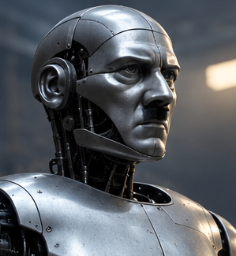
Athletic humanoid. Matte charcoal steel. Cold brushed joints. Face is one horizontal dark visor slit. No human face. No insignia. No lettering. No salute.
Public voice is mechanical satire. No hate speech. No antisemitic content. No Nazi imagery.
Light rules in use
- Noon. About 5650K. Hard light. Highlight-to-shadow can run near 12:1. Edges cut. The plate does not go warm by itself.
- Overcast. Soft, nearly shadowless. Highlight-to-shadow about 1.8:1. Charcoal stays even, not amber.
- Low-pressure sodium. About 589 nm. Orange-yellow line, not a white wash. Dark base stays dark outside the beam.
- Fluorescent. About 4000K with a green cast. Cooler than tungsten. Do not call it warm.
- Campfire. Warm orange glow. Dark base stays deep. No Kelvin on this rule.
- Candle. About 1850-1950K. Orange-red, dim, directional. Lit edges stand out. Surrounding dark stays deep. Not a campfire reshoot.
- Blue hour. Cool and soft. One page cites about 10,000-12,000K. Civil twilight is cited shifting about 4,500K to 6,200K, cooler by the end. Matte charcoal reads cooler, not warm. Sky can grade deep blue overhead to warmer near the horizon. Used on Empty Ramp, Blue Hour.
Logged, not yet a rule
- Bare tungsten. About 2700-3200K, orange-yellow, amber if not white-balanced, clearer shadows than cool fluorescent. Off the doctrine until Concrete Bay, One Bulb exists as a still.
- Moonlight. Not monochromatic. Peak about 550 nm. Less blue and deep red than daylight. About 4200K cited for a natural look. Filmmaking notes call it gray-silver; steel blue needs a gel. Off the doctrine until a plate uses it.
Retired rooms
Do not reshoot: kitchen, service bay, parking, plug, rooftop floodlight, ferry deck, underpass, bus shelter, freight elevator, noon sidewalk.